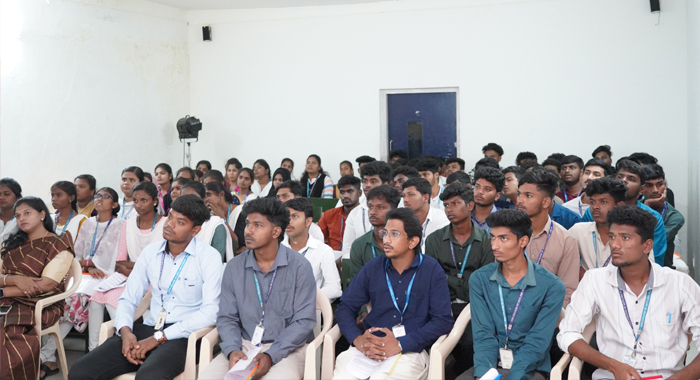
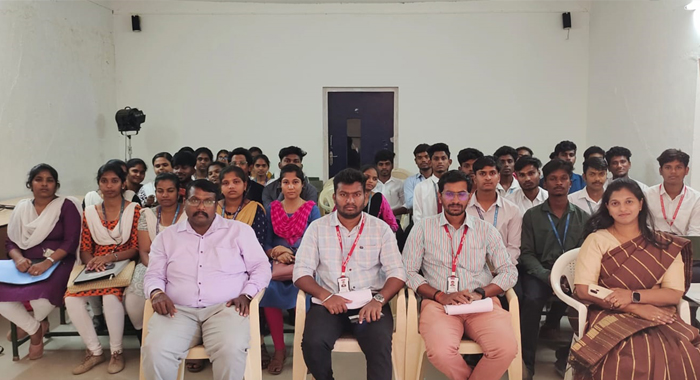
SMS College of Arts and Science follows a well-defined academic structure prescribed by Bharathiar University, Coimbatore. The institution offers a wide range of Undergraduate, Postgraduate, and Research programmes designed to meet contemporary academic and industry requirements. The academic framework integrates theoretical learning with practical exposure, ensuring that students gain both conceptual clarity and professional competence. The semester-based system, continuous assessment methodology, and structured curriculum enable students to progress systematically in their chosen disciplines while developing analytical and problem-solving skills.
The institution adopts Outcome-Based Education (OBE) as an integral part of its academic framework to enhance the quality of teaching and learning. OBE focuses on clearly defined learning outcomes that specify the knowledge, skills, and attitudes students are expected to acquire upon completion of their programmes. The curriculum, teaching strategies, and evaluation methods are aligned with these outcomes to ensure measurable student performance and academic effectiveness. This approach enables students to develop subject expertise, employability skills, and professional competencies required to compete in national and global environments.
SMS College of Arts and Science employs innovative and student-centered teaching methodologies that promote active learning and intellectual engagement. Classroom teaching is supplemented with seminars, workshops, group discussions, case studies, project-based learning, industrial visits, and experiential learning practices. Faculty members adopt modern pedagogical techniques to encourage critical thinking, creativity, and practical application of knowledge. Continuous internal assessments, assignments, presentations, and academic interactions ensure consistent learning progress and academic excellence.
To support technology-enabled education, the institution utilizes a Learning Management System (LMS) that facilitates effective teaching, learning, and academic monitoring. The LMS enables digital sharing of study materials, assignments, assessments, and academic resources, thereby enhancing accessibility and flexibility in learning. It also supports communication between faculty and students, promotes self-learning, and ensures systematic tracking of academic performance. The integration of digital learning tools strengthens the institution’s commitment to modern education practices and blended learning environments.
Copyrights © 2026 SMS College of Arts and Science. Designed by 
 Admissions Toll-free : +91 77084 41116
 admin.sms@cherancolleges.org